








What Are G15 Polarized Lenses? Everything You Need to Know
When shopping for high-performance sunglasses, you will inevitably run into one of the most iconic optical designations in eyewear history: G15.
Originating in the military aviation industry and popularized globally by Ray-Ban, the G15 lens is legendary for its distinct grey-green hue and neutral color rendition. But what exactly makes a lens "G15"? And what changes when you combine the classic G15 tint with modern polarization technology?
Here is everything you need to know about G15 polarized lenses—how they work, why their color transmission matters, key benefits, and how to choose the right lenses for your lifestyle.
What Does "G15" Stand For?
To understand G15 polarized lenses, it helps to break down the technical shorthand:
-
"G" (Green Tint): The tint of the lens is predominantly green, which accentuates wavelengths of light that human eyes perceive most comfortably.
-
"15" (15% Visible Light Transmission / VLT): The lens allows only 15% of visible light to pass through while blocking the remaining 85%.
Originally developed in the late 1930s for military pilots needing to reduce glare and visual fatigue at high altitudes, G15 lenses were designed to protect vision without distorting the surrounding natural colors.
How Do G15 Lenses Work?
Human eyes process green light with maximum sensitivity. Traditional dark grey lenses can make environments look overly flat or dull, while brown/amber lenses alter ambient color warmth significantly.
The G15 tint balances the visible color spectrum:
-
Equalized Spectrum Absorption: G15 lenses absorb green, red, and yellow light in roughly equal proportions.
-
True-Color Perception: Because light frequencies are attenuated uniformly, objects retain their natural colors. Greens look greener, skies retain deep blue hues, and whites remain crisp without color casting.
-
Contrast Enhancement: Green tones gently boost optical contrast without the extreme color distortion seen in yellow or copper lenses.
The Power Upgrade: G15 + Polarization
A standard G15 lens is tinted to manage brightness, but tint alone cannot block reflected glare. That is where polarization comes in.
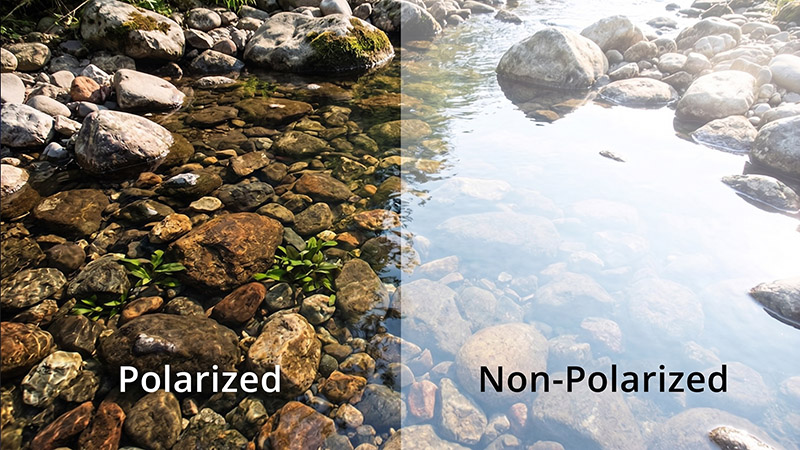
When light reflects off flat horizontal surfaces—such as open water, wet asphalt, snow, or car hood glass—it concentrates into intense, horizontally polarized light waves that create visual blinding glare.
Standard G15 vs. G15 Polarized
| Feature | Standard G15 Lens | G15 Polarized Lens |
| Visible Light Transmission | ~15% | ~15% |
| UV Protection | 100% UVA/UVB | 100% UVA/UVB |
| Brightness Reduction | High | High |
| Reflective Glare Blocking | Minimal (dampens overall light) | High (eliminates up to 99% of surface glare) |
| Visual Clarity over Water/Roads | Moderate | Exceptional |
By placing a microscopic polarine filter inside the G15 lens matrix, G15 polarized lenses combine natural color fidelity with complete surface-glare elimination.

Key Benefits of G15 Polarized Lenses
1. Reduces Eye Fatigue and Strain
Bright ambient sunlight combined with reflected glare forces your eyes to squint continuously, causing eye strain and tension headaches. The 15% VLT dims harsh light, while the polarization filter relaxes your facial muscles by neutralizing glare.
2. Natural "True-to-Life" Color Accuracy
Unlike high-contrast copper, amber, or rose lenses—which skew surrounding tones significantly—G15 lenses keep colors true to reality. You experience your surroundings as they naturally look, just darker and far more comfortable to view.
3. Superior Contrast and Depth Perception
By absorbing green light selectively, G15 lenses naturally highlight green landscape foliage, turf, and outdoor background contrast. This provides subtle, natural sharpness without artificial color shifts.
4. Maximum Outdoor Glare Protection
Whether driving towards a wet highway after rain or spending hours on open water, G15 polarized lenses cut through blinding reflections, revealing details hidden beneath surface reflections.
G15 vs. Grey vs. Brown Polarized Lenses
Choosing the right polarized lens tint depends heavily on your primary activities and visual preferences:
| Lens Tint | Color Perception | Contrast Level | Best Activity / Environment |
| G15 (Green) | Highly Natural | Moderate-High | Driving, everyday wear, golf, water sports, hiking |
| Neutral Grey | True Neutral | Standard | Full-sun offshore boating, intense equatorial glare |
| Brown / Amber | Warm / High Contrast | High | Driving in variable clouds, trail running, shallow fishing |
-
Choose G15 Polarized if: You want a balanced, versatile lens that relaxes your eyes in full sunlight while maintaining crisp, true-to-life colors.
-
Choose Grey Polarized if: You want neutral light reduction without any green bias.
-
Choose Brown Polarized if: You prioritize maximum contrast over color accuracy in overcast or variable lighting.
Ideal Uses for G15 Polarized Sunglasses
G15 polarized lenses excel across a wide range of everyday and outdoor scenarios:
-
Driving: Reduces windshield reflections and road glares while ensuring traffic signals (red, yellow, green) remain clear and recognizable.
-
Golfing: Enhances the contrast between green grass turf and ball positions without distorting course depth perception.
-
Boating & Fishing: Cuts through water-surface glare so you can see deeper beneath the water line without squinting.
-
Everyday Urban & Casual Wear: Offers classic vintage aesthetic combined with comfortable, relaxing vision under bright skies.
Frequently Asked Questions (FAQ)
Are all G15 lenses polarized?
No. G15 refers strictly to the grey-green color tint and 15% light transmission level. Standard G15 lenses are non-polarized. Always verify that the lens is explicitly labeled "G15 Polarized" or marked with a "P" (such as Ray-Ban’s G-15 P) if glare-blocking performance is required.
Are G15 polarized lenses good for low-light or night driving?
No. With a 15% VLT, G15 lenses block 85% of visible light, making them designed specifically for medium-to-bright daytime conditions. They should never be worn for night driving or extremely low-visibility conditions.
What lens material is best for G15 polarized lenses?
-
Glass (Mineral Glass): Offers unmatched scratch resistance and optical clarity, but adds extra weight.
-
Polycarbonate / Tri-Acetate (TAC): Lightweight, impact-resistant, and ideal for sports or active use.
Final Thoughts
G15 polarized lenses represent a ideal balance between optical tradition and modern lens technology. By pairing the relaxed color balance of the military-tested green-grey tint with an advanced glare-reducing polarization filter, G15 polarized sunglasses deliver exceptionally comfortable, crisp, and natural visual performance under bright skies.